
How Gummy Candies Are Made: The Science Behind Your Favourite Sweet
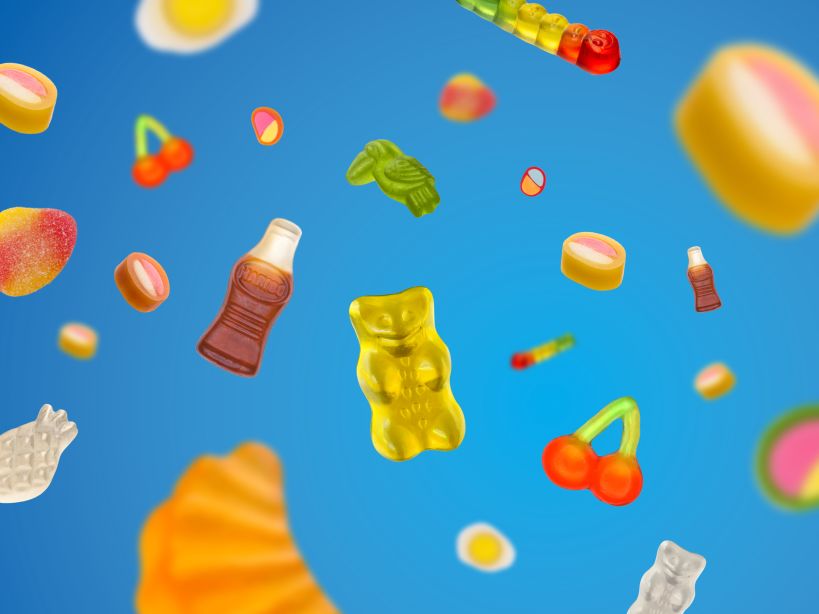
Image source: Haribo (official site) – haribo.com/en/about-us/history
Why are gummy candies gummy and not hard like traditional candies? The answer lies in a single ingredient – and in the process that takes place in the factory before the candy even reaches the bag.
The secret ingredient: gelatin (or pectin)
The main ingredient that gives gummy candies their elastic, chewy texture is gelatin – a protein derived from animal tissue that forms a gel when dissolved in hot water and then cooled. In vegan versions, gelatin is replaced with pectin (derived from fruit) – but pectin behaves differently: it requires a high sugar content and acidity to even form a gel, so vegan gummy candies often have a slightly different, firmer texture than the classic ones.
How the shape is created – the starch moulding process
The liquid mixture of gelatin, sugar, flavouring, and colour is poured into moulds made of – starch. Whole sheets of fine starch have imprinted shapes (bears, worms, fruit), into which the mixture is poured while still hot. After that, the candies are cooled for hours, sometimes overnight, until they harden enough to hold their shape. Finally, they are removed from the starch, and many are further coated with a layer of sugar or wax to prevent them from sticking together in the packaging.
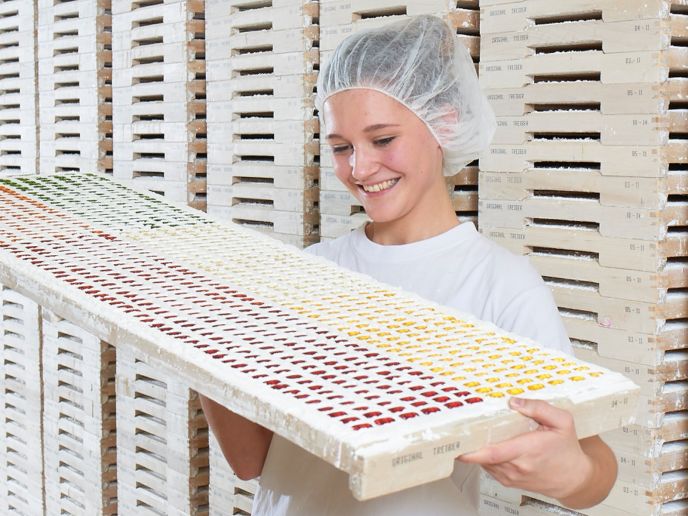
Image source: Haribo (official site) – haribo.com/en/about-us/history
Who invented the gummy bear?
The first gummy candy in the shape of a bear was created by German confectioner Hans Riegel in 1922, inspired by dancing bears that performed at European fairs. It was called "Tanzbär" (dancing bear) and was larger and slimmer than today's versions. That year, Riegel founded the company HARIBO (short for Hans Riegel Bonn) – a company that still exists today and is considered the inventor of the gummy candy as we know it.
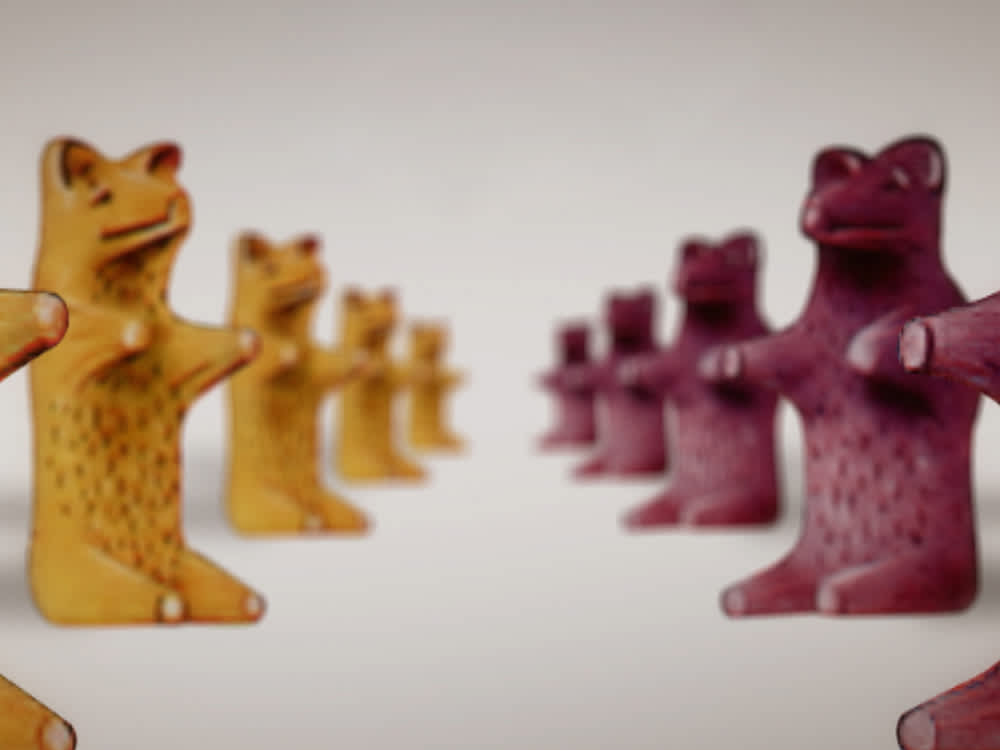
Image source: Haribo (official site) – haribo.com/en/about-us/history
Why do some gummy candies have a sour coating?
Sour gummy candies (like Sour Patch Kids) go through an additional step after moulding – they are dusted with a mixture of citric or malic acid and sugar. This outer layer gives the first sharp "sour" hit, while the inside of the candy remains soft and sweet – hence the well-known "first sour, then sweet" effect.
Where to try different styles of gummy candies
Now that you know how they are made, check out the collection of gummy candies at OhMyCandyBox – from tangy classics to more modern, visually appealing formats.
Frequently Asked Questions
Are all gummy candies made with gelatin?
No – the classic ones are, while vegan versions use pectin or agar instead of gelatin.
Why do gummy candies stick together in the bag?
If they are not coated enough with sugar or wax after moulding, moisture on the surface causes them to stick.
Who invented the gummy bear?
Hans Riegel, the German confectioner and founder of Haribo, in 1922.
